
This week we’re launching a new service for our readers and community, a community events calendar.
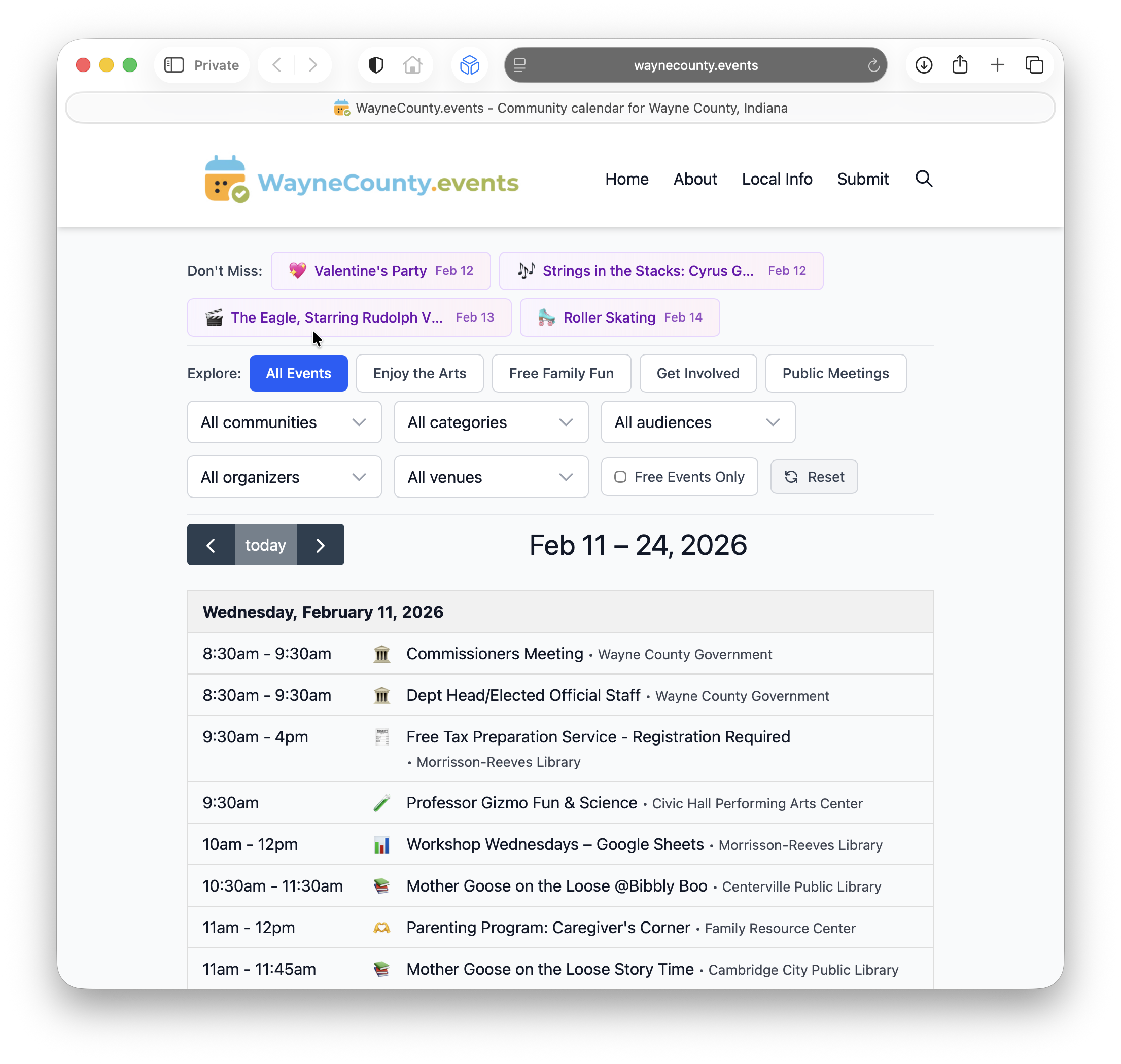
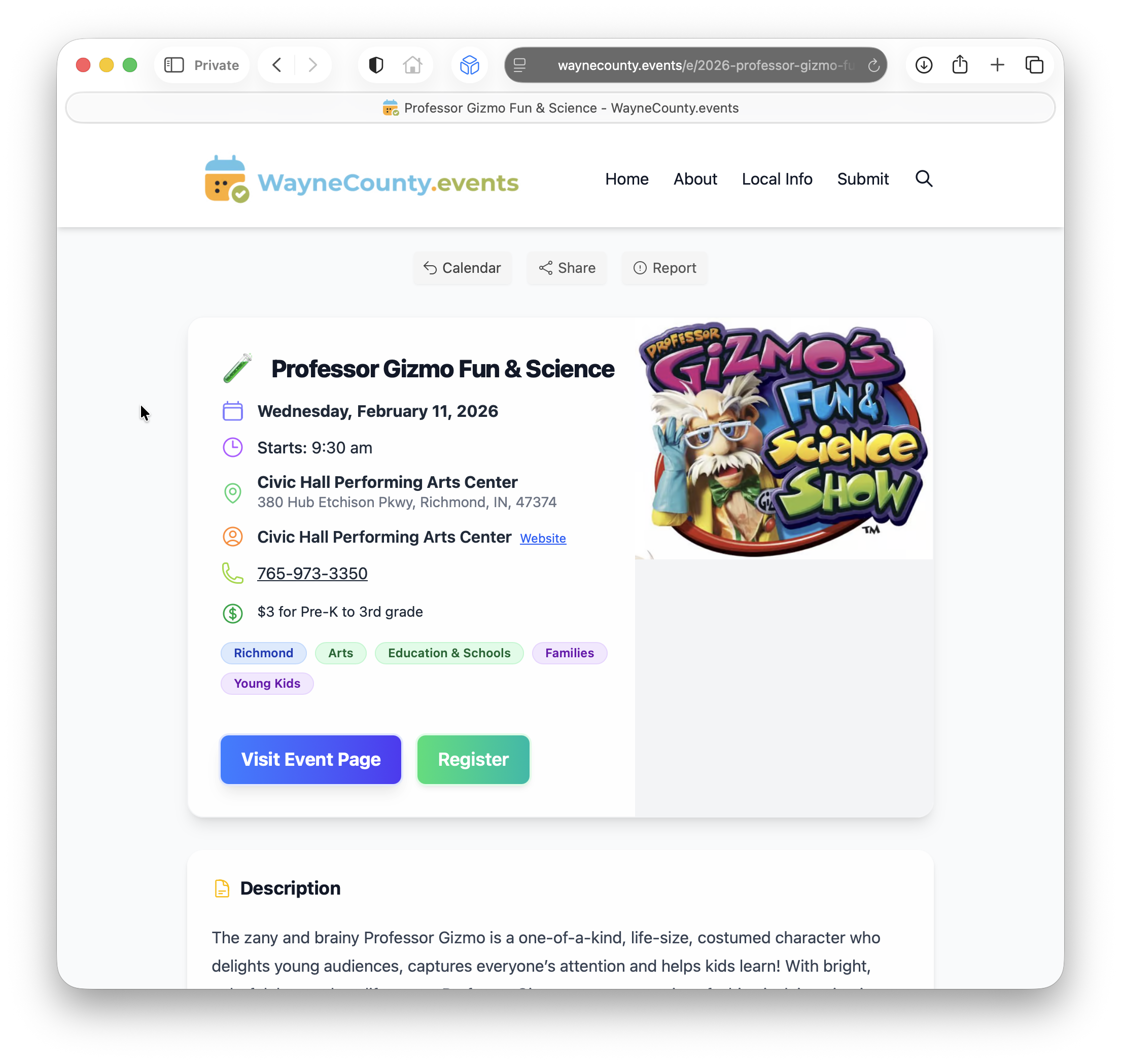
It’s called “WayneCounty.events” and I built it from scratch.
Trying to not build it from scratch
I am probably supposed to call it “YACC” (Yet Another Community Calendar) because I know this is a space that has been reinvented a million times already.
I promise, I looked extensively at other calendar solutions and really tried to like one that I could just pay for, contribute to and/or extend instead of building my own, but I couldn’t get past some key challenges or concerns:
- They were built for promoting one organization’s events instead of helping a community like ours organize lots of different events from lots of different sources.
- They used too many black-box tools / AI hand-wavy-things to automatically source events for you, and end up with nonsense (events from Richmond, Virginia instead of Richmond, Indiana, events from two hours away, etc).
- They required event hosts/promoters to fill out cumbersome forms to have events considered for addition.
- They didn’t have support for basic open technologies like ICS/iCalendar feeds.
- They had pricing structures and record limits that didn’t feel compatible with our long term plans and growth.
- They were all about harvesting your event data to get their systems in good with the hungry search engines/AI bots/etc. instead of actually helping you get events on your own platform/site.
- The user experience was terrible.
I’m not saying there are no good calendar software options out there or that anyone else’s model is right or wrong, but I knew if I was going to launch a new service for our community that endeavors to be a reliable, credible, one-stop source of events, I would need to be 100% confident in how it worked and how it could be extended. So here we are.
I started planning for this in 2023, alongside some other folks in the community who were interested in trying to solve our calendar fragmentation problem. I’ve started building it several different times since then, but had to stop and start over because the architecture just wasn’t going to work the way I wanted it to, or I was trying too hard to integrate it with our existing publications and tools.
In July 2025 I had some new insights about how to approach it, and started building it again in earnest in the fall. I launched an alpha version in December, a beta version in January, and we’ve been testing/refining it internally over the last few weeks in preparation for this week’s initial announcements to the community.
It’s now also powering our print calendar publishing process, so we’re featuring it a bit there too:
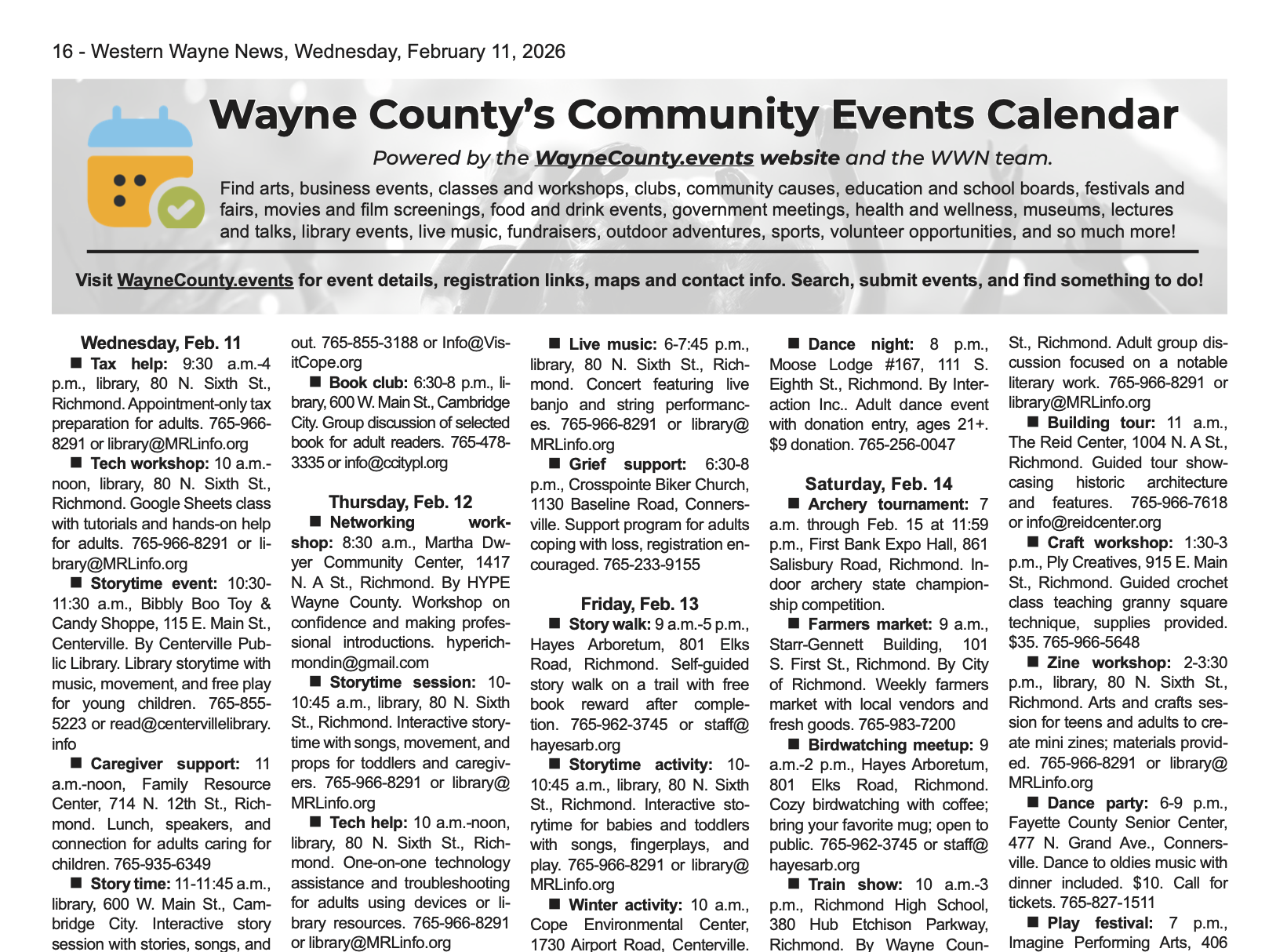
Yes, the photo behind the header is people dancing at a rave. No, we do not have any raves here, that I know of. (There is a silent disco coming up, though.)
Features
Things it does:
- Basic front end things like display a calendar, allow for searching, sorting and sharing.
- Provides upcoming event preview listings for our other publications via API
- Manages events as well as event hosts, venues, categories, audiences, geographical communities, tags and related data.
- Allows site admins to define site branding, geographical information, event filtering presets, featured events, etc.
- Supports automatic event importing via ICS/iCalendar, Google Calendar, and some social media platform APIs.
- Supports event detection and importing from arbitrary text, web pages and images, using commercial LLMs.
- Supports event enrichment using commercial LLMS (e.g. pick an event emoji, get event contact and registration info from free-form descriptions into the right specific fields).
- Supports geocoding venues for map accuracy and duplicate venue detection.
- Allows site admins to define nuanced user roles and permissions.
- Supports regular user accounts or SSO sign on.
- Basic CMS features including publishing page content and menu management.
- Tools for reverse publishing a subset of events for print, e.g. in a local newspaper.
- Failing feed detection and exponential backoff/retry logic
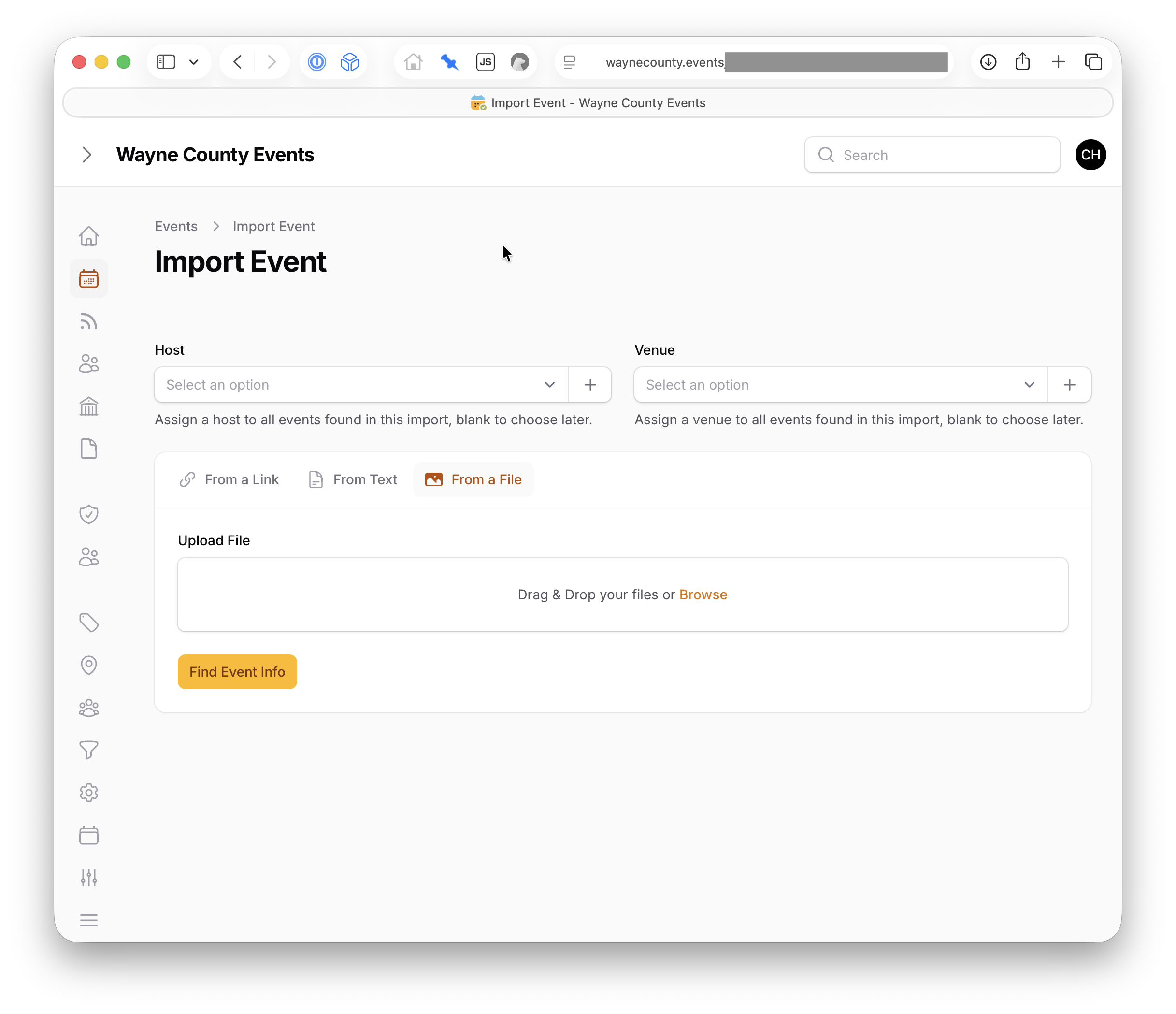
Planned features include:
- Administrative event notification management (e.g. send a note to Slack when a new venue is automatically created from a feed, send an email when an event may have been canceled, etc.)
- Support for more types of event feeds.
- Extending the REST API and formalizing a system for community partners to embed and display event info on their platforms
- WordPress plugin/widget
- Allow users to “follow” venues, hosts, communities and receive notifications/updates when there are changes they might be interested in
- A long list of other things
It’s made with Laravel, Filament, Livewire and Tailwind CSS.
I built the software in a way that it could be deployed for most any kind of community. No, I haven’t figured out yet if and how I might make it available for others to use. My ideal would be to open source it, but there are some details to figure out first.
I put a lot of time into this thing, and my team already puts a lot of time in to curating event information for our community. There’s a lot more to do with it, and I should eventually figure out a business model for it, but I’m proud of this milestone, excited about finally seeing it out in the world, and hoping people find it useful!

Leave a Reply